Ever wondered why there are no organ donor programs for dead laptops?
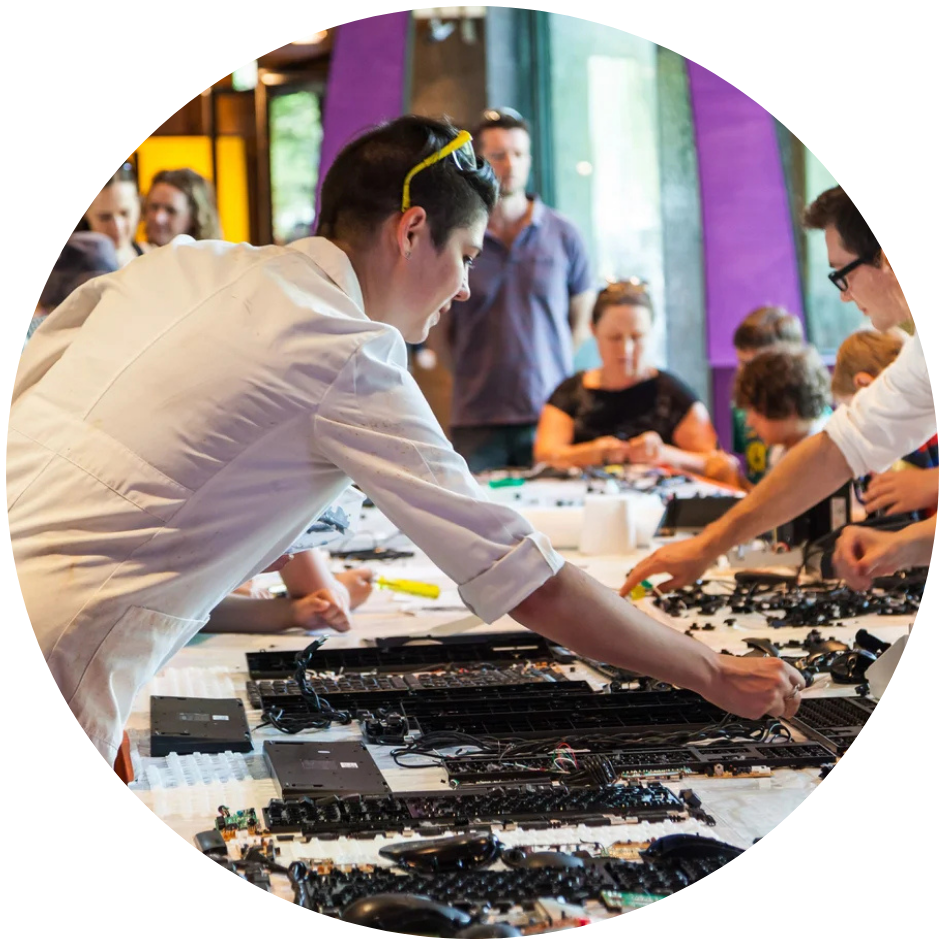
In this interactive installation at the National Gallery of Victoria (NGV), Leyla invited members of the public to join “dead stuff dissections” during the Sustainable Living Festival in 2014. This included live collaborative autopsies of computer paraphernalia generated by NGV. Together, participants engaged in a critical examination of modern consumerism, exploring what lies hidden within the everyday things that fill our lives.
How we did it
When NGV commissioned Leyla to create a public-facing interactive exhibition during a sustainability festival, she asked the gallery if they had any old electronic waste to explore. They had just decommissioned all the keyboards and mice from their computers, so she invited the public to disassemble them collaboratively, to find out how they were made and what the possibility for reuse and repair would be.
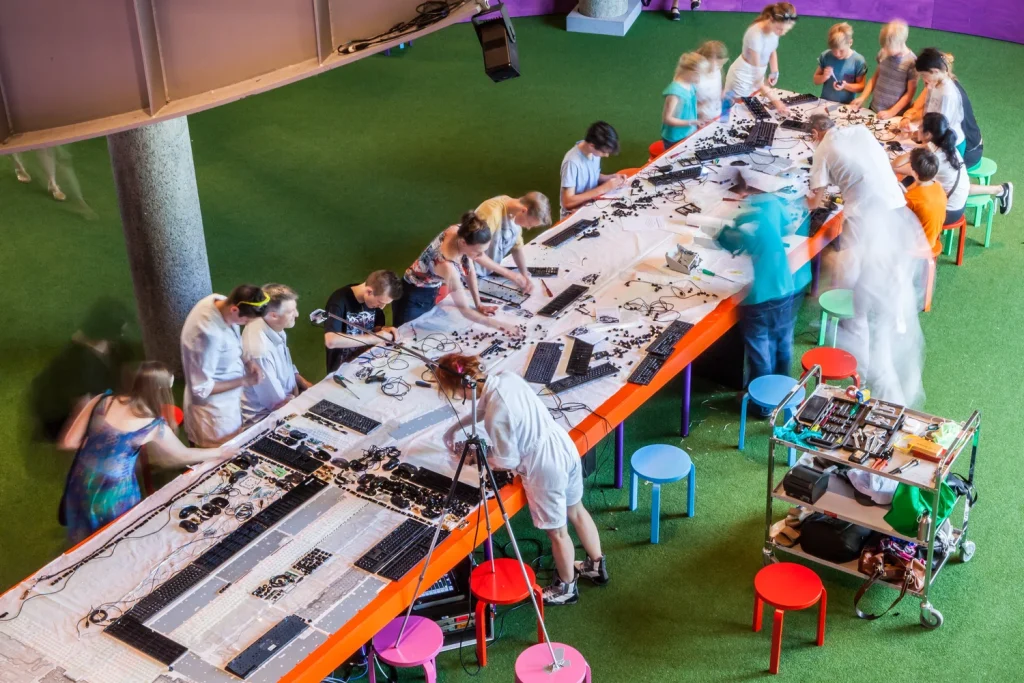
Over a day, people would sit down at the long table and use various tools to disassemble the items. In the process of doing that, they would see how the product was made, what materials went into making it work and how difficult it was to take apart—therefore, how nearly impossible it was to repair it.
The dissected components were then artistically arranged in an “e-waste autopsy,” along the long table, sorted by material (plastics, metals, glass) and weighed to assess their recyclability. The experience revealed the hidden design flaws of everyday electronics and sparked critical conversations about repair, waste and the myth of recycling in electronic waste.
“The experience helped show participants the complexity of everyday design, the lack of repairability and the problems with relying on recycling.”
—Leyla Acaroglu

Want to commission an interactive exhibition?
Get in touch with our team