A Playful Approach to Complex
problem-Solving
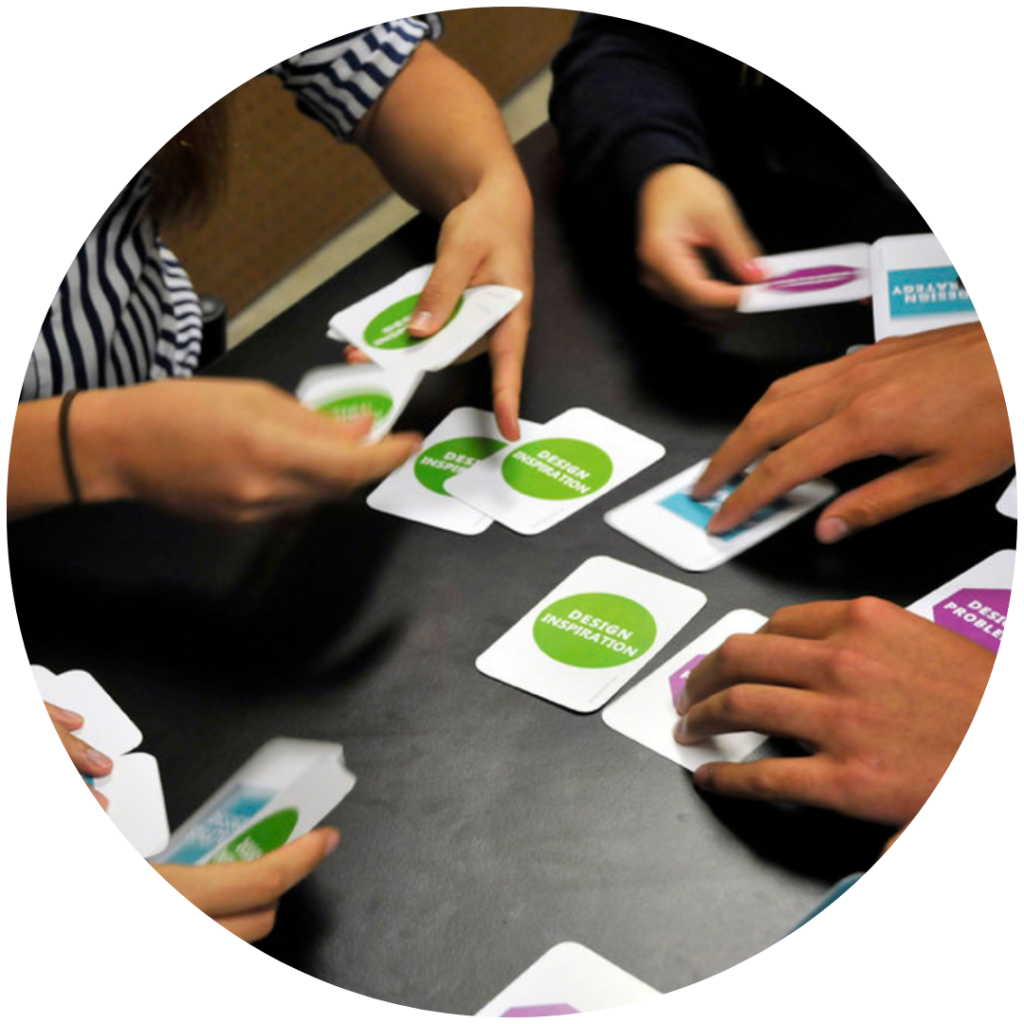
One of the first games created by Leyla (2010) and now used by schools and creatives worldwide, The Design Play Cards are a great way to introduce sustainable design principles and encourage creative solutions to real-world problems. Leveraging a fun, hands-on approach, the full deck is available as a DIY project in both English and Spanish.
It includes 50 cards in three sections:

Design Problems
Explore a range of universal social and environmental challenges, from everyday issues like toasters burning toast (and wasting food) to the global crisis of e-waste.

Design Strategies
Discover a variety of eco-friendly design approaches, such as design for disassembly and systems thinking. These strategies offer powerful perspectives to rethink how things are made and solve tough problems.

Design Inspiration
Get inspired by real-world case studies showcasing innovative sustainable design solutions and successful business applications.
Winner of the Core77 Design Education Award
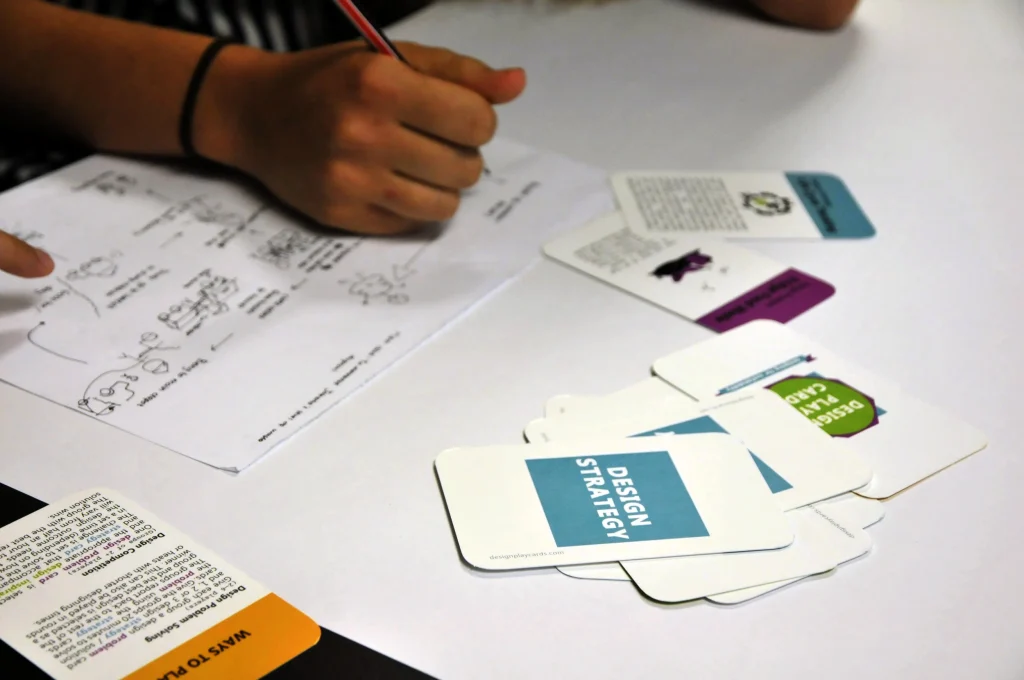
Use cases for the Design Play Cards
Fun and practical, these play cards spark conversations about sustainability and offer countless ways to inspire creative problem-solving in diverse settings.

Design Teams
Gather your team and each select a design starter to ideate potential solutions that can be applied to a design problem you are experiencing. Then compare the diversity of solutions generated.

Educational Settings
Encourage students to work in teams to collaboratively solve real-world design problems using one or more design strategies. This approach builds critical thinking and sustainable design skills through hands-on experience.

Solo Skill Building
Looking for brain-activating skill-building? Use the cards as an inspiration deck or challenge yourself with a memory game by matching sustainable design strategies to their corresponding problem set.
“Leyla Acaroglu aims to make people think about how the choices they make on a daily basis affect the environment. And she aims to make thinking about this fun.”
— Kate Torgovnick May, TED Blog